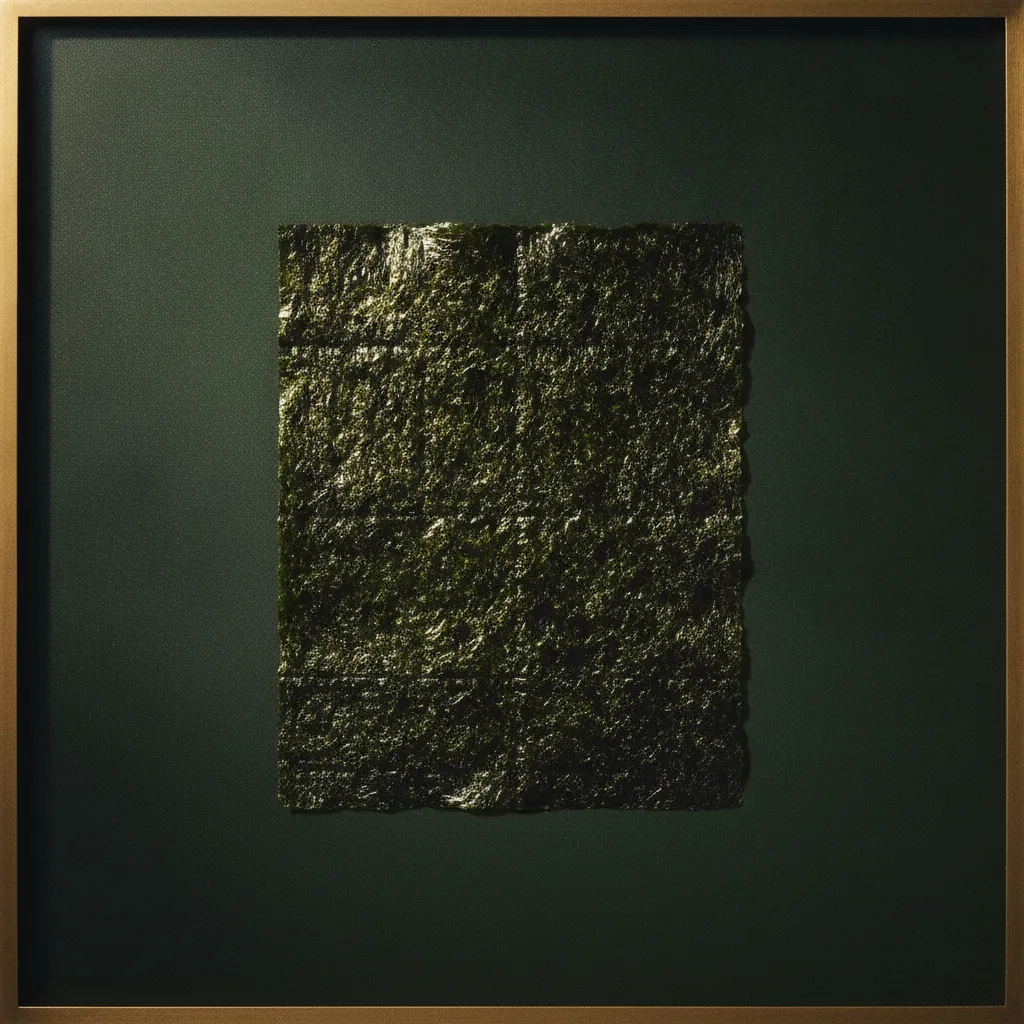
No. I Specimen ・ Yaki-Nori
Trade ・ Household
焼海苔
Yaki-Nori
Only the finest first-harvest seaweed, slowly roasted at low heat. This is the sheet that reaches the sushi counter. A glossy black that dissolves on the tongue.
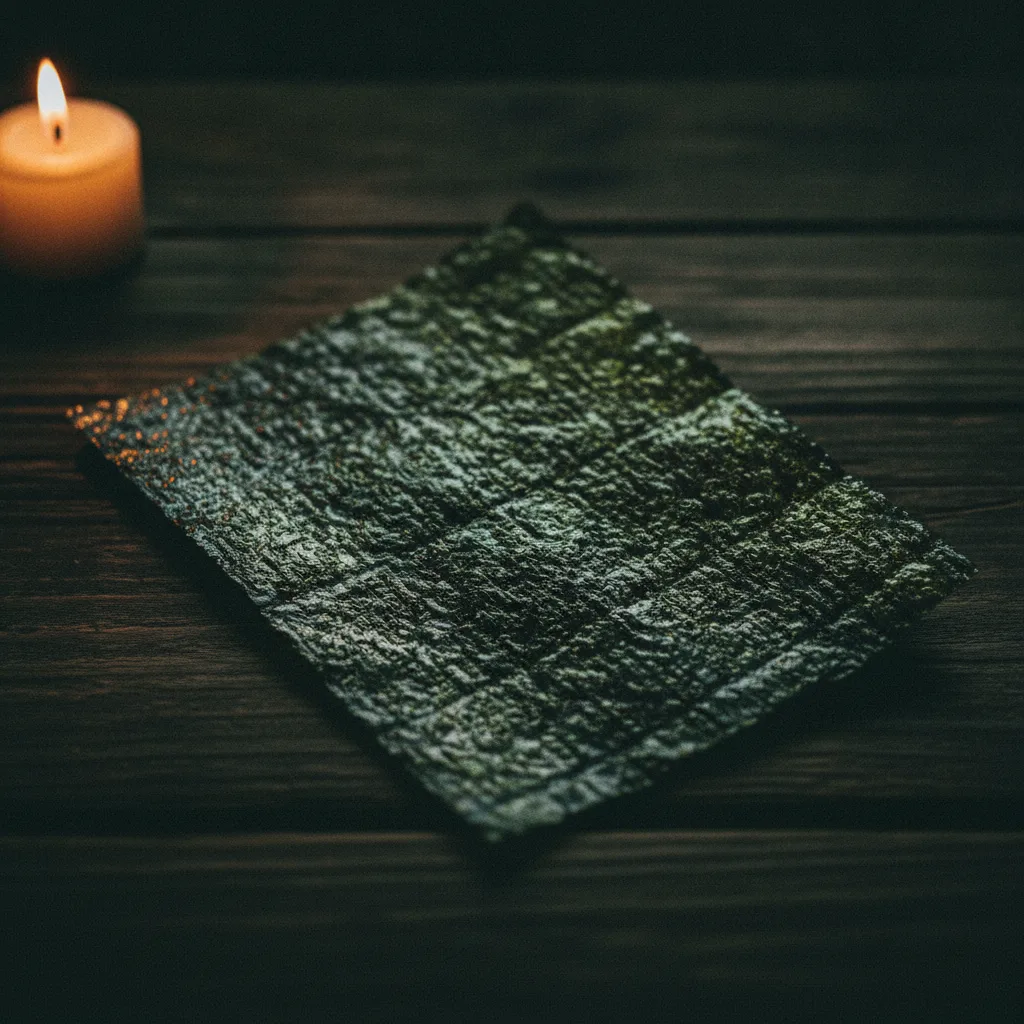
Lit in Ryōgoku, 1923. Four generations, nori alone — from the Tsukiji outer market.
Nineteen twenty-three. Taishō 12. A small sign went up in Ryōgoku — a nori wholesaler. Before the war, after the war, through every Tokyo morning, it supplied the city’s tables and the noren of its sushi shops.
After the war, a retail shop opened in Tsukiji, with a factory-direct operation in Ichikawa, Chiba. Four generations have done just one thing: select sheets that are dark, glossy, and melt on the tongue.
“Nori is paper. But paper that breathes the sea.”
Only the finest first-harvest seaweed, slowly roasted at low heat. This is the sheet that reaches the sushi counter. A glossy black that dissolves on the tongue.
A brush of soy, mirin, sugar. Sea salt and Edomae sweetness meet — a single piece for the morning meal. A flavour loved across four generations, from children to grandparents.
The edges trimmed during roasting, nothing wasted. Sesame and bonito, toasted together. A single shake over white rice — a morning at Tsukiji itself.

Nori cannot be measured by machine. Held to the light — the gloss, the colour, the grain, and then, on the tongue, the way it melts. All confirmed by eye, finger, and palate.
No two sheets are ever the same; season, current, and coast all change. Only the eye passed down through the family, generation to generation, decides the grade of a single leaf.